Saturday, March 20, 1:00 p.m.
Harlem Renaissance
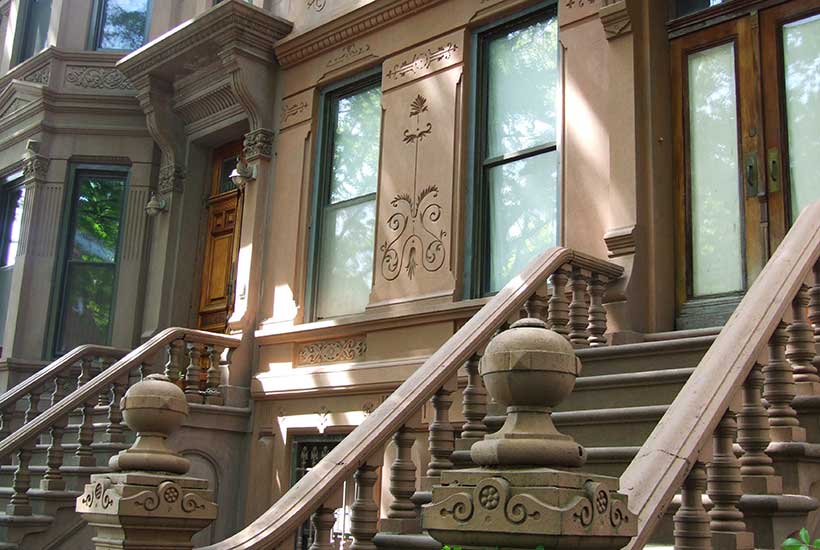
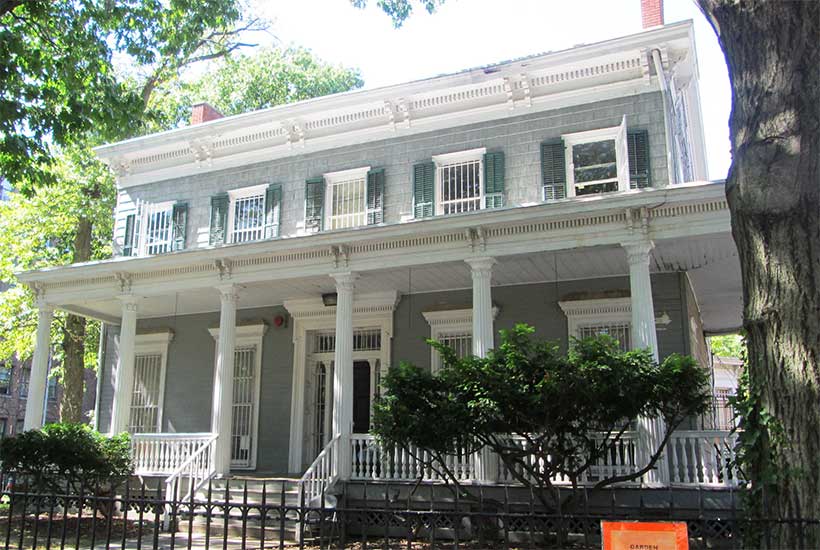
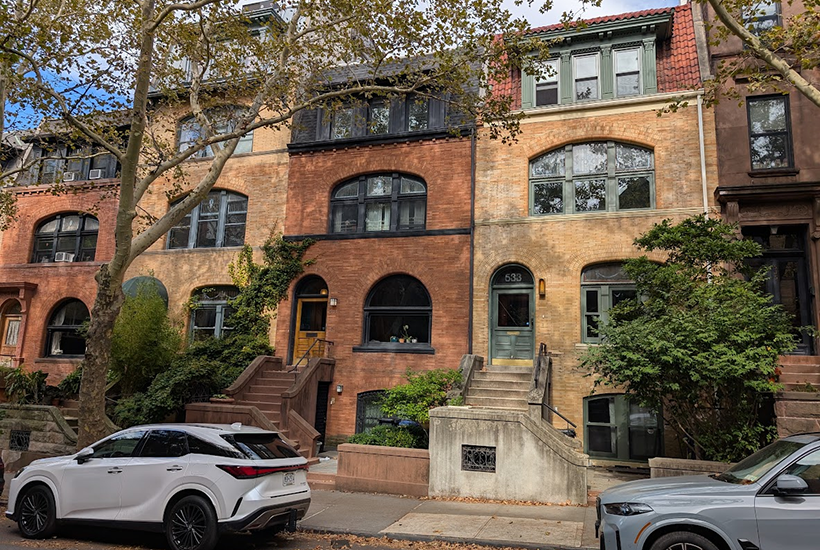
Since the early 1900s, Harlem has been one of the most exciting, vibrant and largest African-American communities in the United States. We’ll walk from the beautiful homes of Hamilton Heights to the row houses of Strivers Row, from the night clubs and speakeasies of the 1920s to the famous Apollo Music Hall and Sugar Hill. Travel the streets where Langston Hughes, Madame C.J. Walker, Duke Ellington, Count Basie and other luminaries once lived. Leader: Marty Shore, urban historian. Meet at the N.E. corner of 125th Street and Adam Clayton Powell Blvd.
Sunday, March 21, 12:45–approximately 4:30 p.m.
A Stroll through Rosebank, Staten Island
Come along on a stroll through the Italian-American community of Rosebank, along narrow lanes lined with small-scale houses and gardens planted with grape vines and fig trees. We’ll visit two very different but equally significant structures: the folk art Grotto of Our Lady of Mt. Carmel and the Downingesque Alice Austen House. Leader: Francis Morrone, architectural historian. Bring a MetroCard. $15, $10 MAS members. Includes admission fee for Alice Austen House and refreshments. Reservations required. Call 212 935 2075 for tickets. Meet at the top of the escalators in the Staten Island Ferry Terminal, next to Battery Park. (Transit: #1 train to South Ferry; R train to Whitehall)
Saturday, March 27, 11:30 – 2:00 p.m.
Where Does Harlem Begin?
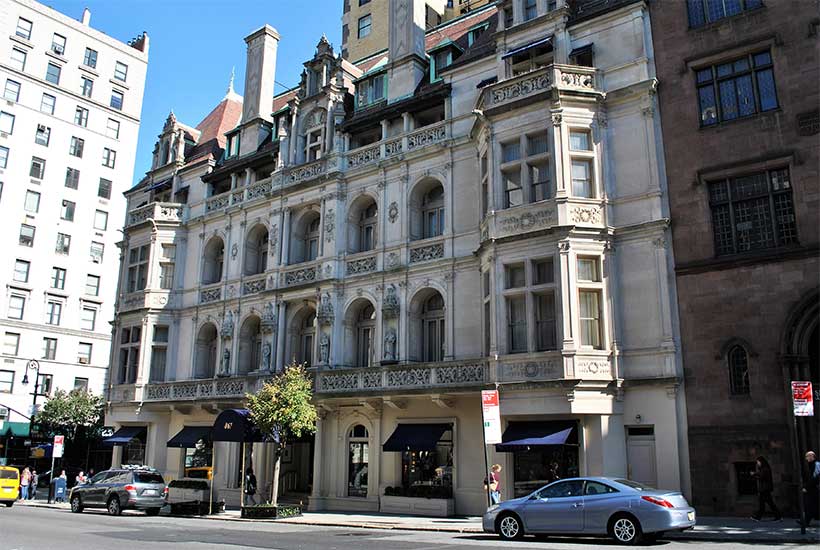
In what is a most remarkable transition from wealth to poverty, the grand apartments on the Upper East Side of Manhattan yield to the tenements and projects of East Harlem in just a few city blocks. The slope where this transition occurs actually stretches from the Hudson River to the East River and, historically, has always marked a change in land use. Leader: Jack Eichenbaum, urban geographer. $15, $10 MAS members. Pay at tour. Meet at the NE corner of Lexington Ave. and 86th St. (Transit: #4, 5, 6 trains to 86th St.)
Sunday, March 28, 11:00 a.m.
Gramercy Park to Stuyvesant Square
These memorable historic districts contain some of Manhattan’s most beautiful and varied streetscapes. Both were developed around parks in the mid-19th century and feature impressive
homes, prestigious clubs and religious institutions. The origins of each neighborhood will be discussed, as well as how these residential districts have evolved and resisted change. Highlights include the homes of interior designer Elsie de Wolfe and thespian Edwin Booth, as well as architect Frederick Sterner, who transformed a section of 19th Street into the “Block Beautiful.” Leader: Matt Postal, architectural historian. $15, $10 MAS members. Pay at tour. Meet outside 111 East 15th St., just east of Park Ave. South.
Saturday, April 3, 11:00 a.m.
Manhattan Streetscapes: The Good, the Bad & the Awful
Come along on a tour of some of the best and worst streetscapes that Manhattan has to offer, from the charm of Stone Street to avenues lined with tacky newsracks; from the integrated design of the Grand Central Partnership to streets that sport sorry furniture and illegal signage. Leader: Andy Manshel, former general counsel and director of public amenities for GCP/34th St/BPRC & co-chair, MAS Streetscapes Committee. Bring a MetroCard. $15, $10 MAS members. Reservations required: Purchase tickets online or call 212 935 2075. Meeting place supplied after RSVP.
Sunday, April 4, 2:00 p.m.
Fighting the Good Fight: Landmark Battles in Midtown
Midtown Manhattan has seen more than its fair share of landmark battles. On this walk in celebration of the Landmark Preservation Commission’s 45th birthday, we consider the landmark rationale and battle history of the Villard Houses/Palace Hotel, Lever House (one of the new breed of “Modern” landmarks), St. Bartholomew’s Church, Grand Central Terminal (whose landmark status was finally upheld by the Supreme Court), and the Chrysler Building (bankrupt in the 1970s, it faced demolition). Leader: Tony Robins, architectural historian and former director of survey at LPC. $15, $10 MAS members. Pay at tour. Meet in the courtyard of the New York Palace Hotel, Madison Ave., between 50th & 51st streets. This tour will be offered again later in the year. MAP.
Saturday, April 10, 11:00 a.m.
Event Horizon: Antony Gormley’s Madison Square Park
A tradition of public sculpture and notable architectural landmarks makes Madison Square Park the ideal location to display this Turner Prize-winning artist’s American public art debut, consisting of 31 cast iron and fiberglass casts of the artist’s body displayed in, around and above this leafy historic setting. We’ll discuss Gormley’s haunting figurative work and its ongoing dialogue with the built and natural environment, as well as the park’s past and its recent restoration. Event Horizon is presented by The Madison Square Park Conservancy as part of Mad. Sq. Art. 2010. Leader: Matt Postal, architectural historian. $15, $10 MAS members. Reservations required. Purchase tickets online or call 212 935 2075. Meet at Worth Square, Fifth Ave. and 24th St. MAP.
Sunday, April 11, 2:00 p.m.
The First Walk
This was the very first MAS walk, developed and co-led by architectural historian and author Henry Hope Reed in April, 1956. The tour was such a novelty that newspapers sent reporters to cover it. We will begin in Madison Square Park, move on to Gramercy Park and Stuyvesant Square, and end — as that first tour did — at venerable Pete’s Tavern on Irving Place. Leader: Francis Morrone, architectural historian. $15, $10 MAS members. Reservations required. Purchase tickets online or call 212 935 2075. Meet in front of the Admiral Farragut Monument, just inside Madison Square Park from 26th St., about halfway between Fifth and Madison avenues. MAP.
Friday, April 16, 7:45 p.m.
Night, Light and the City: Across the Upper Bay to St. George
This tour begins at the Staten Island Ferry Terminal, at night a welcoming lantern at the tip of Manhattan. From the ferry, we’ll enjoy the glowing skyline and lighted bridges on the five mile voyage to Staten Island. Once in St. George, we’ll visit Postcards, the evocative Staten Island September 11 Memorial designed by Masayuki Sono, with lighting design by Fisher Marantz Stone. We’ll take in the lighting of the waterfront esplanade, Richmond Terrace, imposing civic buildings designed by Carrére and Hastings and more. Leader: Tamara Coombs, director of programs & tours, MAS. Free. Reservations required. Purchase tickets online or call 212 935 2075. Meet at top of the escalators in Whitehall Ferry Terminal. (Transit: #1, and R, W trains to South Ferry/Whitehall; #4, 5 trains to Bowling Green and walk south.) MAP.
Saturday, April 17, 11:00 a.m.–1:00 p.m.
Arts for Transit: Atlantic Terminal
In celebration of the 25th anniversary of MTA’s stellar Arts for Transit program, join us for the second of six tours of notable contemporary artwork permanently sited throughout New York’s subway and rail system. Explore the new MTA Long Island Rail Road (LIRR) Atlantic Terminal with project architect John di Domenico and collaborating artists Allan and Ellen Wexler — the trio responsible for the terminal’s soaring, light-filled atrium. Then join Amy Hausmann, assistant director of MTA Arts for Transit, for a tour of the adjacent installation by artist George Trakas (in collaboration with di Domenico + Partners), located throughout the Atlantic/Pacific Ave. station. Bring a Metro Card. $15, $10 MAS members. Reservations required. Purchase tickets online or call 212 935 2075. Meet inside the LIRR-Atlantic Terminal, use entrance at Flatbush and Hanson Pl. (in Brooklyn). (Transit: B, D, M, N, Q & R trains, #2, 3, 4, 5 trains.) MAP.
Sunday, April 18, 11:00 a.m.
Turtle Bay
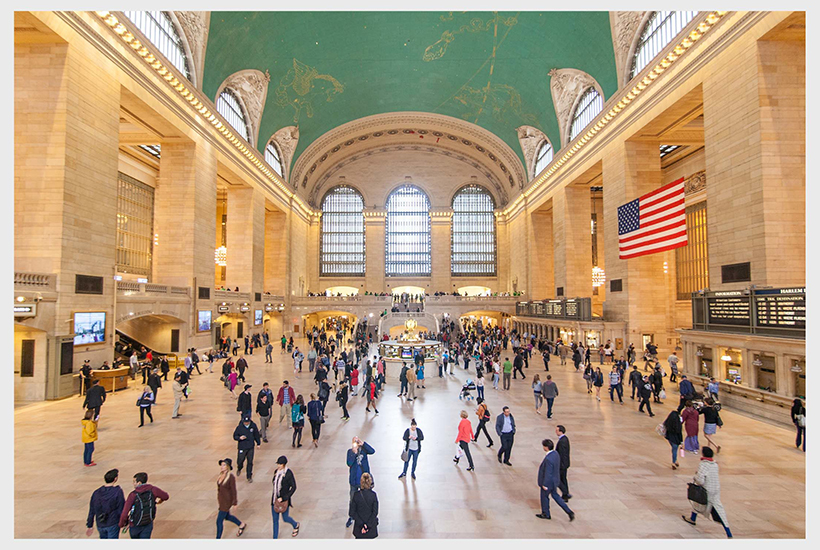
The area between Grand Central Terminal and the United Nations is an interesting mix of hotels, tenements, luxury housing, corporate headquarters and industrial and institutional buildings. E.B. White and Katharine Hepburn, Bishop Fulton Sheen and Alma Gluck are among the noted New Yorkers associated with this neighborhood. We’ll view quirky sidewalks and street art, the Turtle Bay Gardens Historic District, a house by William Lescaze, and the Amster Yard. Leader: Joe Svehlak, urban historian. $15, $10 MAS members. Pay at tour. Meet by entrance to Track 29 in the main concourse at Grand Central Terminal. MAP.
Saturday, April 24, 1:00 p.m.
The Complete Street
A complete street is one that supports all users — pedestrians, cyclists, public transit, delivery vehicles and private cars. Cities across the country are adopting complete streets policies to provide greater safety and livability as well as improve the health of their communities. Since 2008, many of these projects have been implemented in New York City. What has been the impact of these street projects on our public realm? Who benefits? Join us for a tour of a few of the City’s major complete streets projects and learn about advantages, obstacles and trade-offs. Leader: Shin-pei Tsay, LEED AP, deputy director, Transportation Alternatives. Bring a MetroCard. $15, $10 MAS members. Reservations required. Purchase tickets online or call 212 935 2075. Meet at the N.E. corner of 26th St. & 9th Ave. MAP.
Sunday, April 25, 1:00 p.m.
The Evolution of Queens Plaza
Queens Plaza, “five minutes from Bloomingdales,” is where the Queensborough Bridge, Queens and Northern boulevards, eight subway lines and the mainline of the Long Island Railroad all converge in Long Island City. Dormant during decades of industrial decline, the Plaza has undergone rapid recent change. Zoning was dramatically reformulated to accommodate residential and commercial demand for sites convenient to, but much less expensive than, Midtown Manhattan. There has also been significant new construction. Leader: Jack Eichenbaum, urban geographer. $15. $10 MAS members. Pay at tour. Meet at 39th Ave station token booth on the mezzanine level. (Transit: N train to 39th St.) MAP.