There was a time in New York when the appointment of a young person to a community board made the headlines (or close to it). That was back in 1977, when the word “planning” was still a part of the term to describe the 50-member, unsalaried community boards that represent the city’s 59 districts (there were 62 boards in 1977). Current Manhattan Borough President Scott Stringer is a case in point. His commitment to public service spans three decades. Appointed to Manhattan Community Board 12 (Washington Heights/Inwood) at the age of 16, Stringer learned the value of public participation and community involvement at an early age.
In a 1977 interview with the New York Times, a then-teenaged Stringer already had ideas for his community: “My board could be supportive of after-school programs and at least get a committee going — go into schools and organize activities like escort service for old people, cleaning up the parks and all sorts of things (sic).”Continue Reading>>
The designation of the Prospect Heights Historic District is almost complete. Tomorrow the City Council’s Subcommittee on Landmarks, Public Siting and Maritime Uses will hold a hearing on the designation. With 850 buildings, the district is the largest designated in two decades. It’s also one of the city’s finest unprotected brownstone districts, with blocks of beautiful late-19th and early 20th-century residential buildings (for detailed information, read the LPC’s incredible 488-page designation report). Given the strong support of Council Member Letitia James, we expect the Council to uphold the designation, but MAS will be on hand to urge the Council to affirm the Landmarks Preservation Commission’s designation. Read our statement here.
MAS made a video about the process of creating the historic district, featuring Councilmember Letitia James, Chair of the Landmarks Preservation Commission Robert B. Tierney, historian Francis Morrone, and Gib Veconi of Prospect Heights Neighborhood Development Council (PHNDC), and showing how we worked with PHNDC to survey the historic buildings and promote the area for designation. The result was not just the designation; the act of engaging residents in the process brought the community together and provided a new sense of neighborhood identity. Continue Reading>>
The Municipal Art Society of New York’s Board of Directors is pleased to announce that Enid L. Beal and Vicki Been have joined the board this summer.
“I am delighted to welcome Enid and Vicki to the board. Their experience in the fields of business and philanthropy, and urban policy, respectively, make them valuable assets to MAS, and I look forward to their contributions to the organization.” said MAS Chairman David M. Childs.
Enid L. Beal brings an outstanding set of credentials, entrepreneurial know-how, and creativity to MAS. With a track record of excellence in real estate development and financial management, Ms. Beal is also a prominent philanthropist serving as a member of the board of directors of the Island Alliance and the Boston Center for Jewish Heritage, and on the Investment Committees of the Appalachian Mountain Club, New England Conservatory, the Museum of Fine Arts in Boston, and public television station WGBH. She was featured speaker at the National Park Foundation Leadership Summit on Partnership and Philanthropy in 2007, and is president and founder of Beal Consulting Group, Inc., a Boston-based financial planning firm. Continue Reading>>
Need a lunchtime break? Entertaining out of town visitors? Starting Tuesday, September 1, join us for a walking tour of Downtown on Tuesdays at 12:30 p.m. Each hour and a half tour will be led by a knowledgeable MAS guide, either Tony Robins, Marty Shore, or Joe Svehlak.
Architectural historian Tony Robins is especially known to MAS tour takers for his Deco and Broadway theater tours, but also wrote the text for the Downtown Heritage Trail and authored a book on the World Trade Center. Urban historian Marty Shore leads popular MAS tours of Jewish Harlem and is a regular at Grand Central Terminal. He’s been leading Downtown tours for the last nine years. As a teenager, urban historian Joe Svehlak’s first job was as a messenger for a Downtown printing firm. His passion for preservation began as he saw great Downtown buildings lost to the wrecking ball. Joe’s recent “When New York was Nieuw Amsterdam” walking tour was a smash (and even made Dutch television).
Each tour leader will offer his individual perspective, but all will provide an overview of Downtown’s rich and varied history.
New Weekly MAS Walking Tour Downtown: Where New York Began Tuesdays at 12:30 p.m.
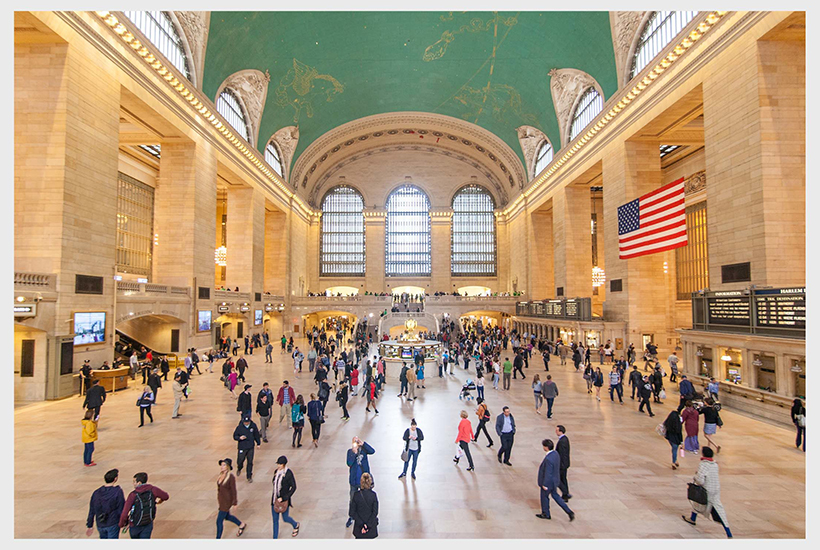
Tours begin at the Downtown Information Center, 55 Exchange Place, Suite 401 (adults, please bring your photo id) MAP. No reservations are necessary. Like our Wednesday Grand Central Terminal tours, there is a suggested donation of $10 per person.
New York is a young city. With a population of over eight million people, 27 percent are below the age of 19, with 10 percent between the ages of 12 and 19. Young people are an integral part of the fabric of New York, representing more than a quarter of the population in neighborhoods such as the South Bronx, East New York, and Corona. Teens, particularly, make intensive use of the public spaces, businesses, and parks and playgrounds in their own neighborhoods and in neighborhoods where they attend school. Issues critical to the quality of life for young people, such as public safety, public health, and a clean environment are part and parcel of debates over urban planning and development, but youth participation in neighborhood decision-making is rare. The obstacles to their participation are considerable, but not insurmountable. Across the city young people and their adult allies are working together to ensure that young voices are heard. Continue Reading>>
Just in time for the last few weeks of summer, Place Matters has identified 10 Great summertime spots, spanning all five boroughs. These summertime spots might not be the city’s most popular or most well-known summertime destinations, but they have demonstrated cultural significance, hold memories and anchor traditions for individuals and communities. We urge New Yorkers to visit these places, and take in the flavors, the history and the cultural traditions that help make New York such a special and livable city.
1.Jahn’s Ice Cream at 81-04 37th Avenue in Jackson Heights, Queens, offers chilled relief from summer heat. “This king of ice cream emporiums goes back to 1897 and earlier,” one nominator wrote. “It has always been a traditional gathering place for locals, singles, partners, groups and families.” Best known for their ‘Kitchen Sink’ sundae, this Jahn’s outpost is the last of several locations that once dotted the city.
2. For another famous Queens confection, head over to the Lemon Ice King of Corona at 5202 108th Street in Flushing. Continue Reading>>
Dixon Place only recently opened its doors on Chrystie Street, but it has had a distinctive presence in the downtown theater scene since 1986. A veritable living room-cum-rehearsal and performance space, Dixon Place has been and remains one of the few New York City venues committed to featuring new and original works as well as nurturing dancers, actors, and literary artists during various stages of their creative process.
Just as artists produce developing works at Dixon Place, so the theater itself has been a work-in-progress. Formally established in 1986, founder Ellie Covan brought the spirit of the impromptu salons she used to hold in Paris to a store front in the East Village. Its opening act was a six month reading series of original works called “Tuesdays at Dixon Place.” Soon outgrowing its space, Ms. Covan moved Dixon Place to her larger, though modest home, on the Bowery. Continue Reading>>
MAS testified on Tuesday before the Landmarks Preservation Commission in support of the landmark designation of two buildings in Midtown built in 1909 for the B.F. Goodrich Company. The buildings, both designed by Chicago architect Howard Van Doren Shaw, occupy an L-shaped site fronting the east side of Broadway (pictured here) and the north side of 57th St (both pictured after the jump). Unfortunately, the buildings’ owner only supports the designation of the Broadway building and is opposing the designation of the 57th St. structure. MAS joined our colleague NYC preservation groups, as well as several groups based in Shaw’s home state of Illinois, in urging the LPC to designate both buildings.
Founded in Akron, Ohio, in the 1870s, B.F. Goodrich rapidly grew in the early 20th c. with the rise of the automobile industry. As a leading automobile tire and rubber manufacturer in the United States at the time, the company wanted a New York presence for its new corporate headquarters. The company selected an L-shaped location on Broadway and 57th Street, at the heart of what was then considered “automobile row.” Running along Broadway and its side streets, from north of Times Square to north of Columbus Circle, automobile row held a concentration of showrooms, repair shops, offices, and other uses all associated with automobile companies like B.F. Goodrich, General Motors, Ford, and Fisk Tires. Continue Reading>>
The Brooklyn Navy Yard recently released its RFP for the redevelopment of the Admiral’s Row site. MAS sees the RFP process as an opportunity to provide practical information to developers interested in responding to the RFP and to encourage the retention and rehabilitation of more than just the required two historic buildings on the site. As part of our Admiral’s Row work, MAS has developed several site plans showing how additional historic buildings can be integrated into new development on the site. In addition, we have gathered many resources on the history and potential future of the site.We are eager to work with developers in tailoring our initial site plans to the information provided in the RFP and to aid in identifying tax credits and financial incentives to help fund the preservation of these buildings.
We hope that our experience and information will be helpful to responders looking to create an exciting new development at Admiral’s Row that combines both new construction and the preservation of the incredibly-significant historic buildings.Continue reading for downloadable resources and further information Continue Reading>>
The Amalgamated Housing Cooperative abutting Van Corlandt Park in the Bronx, is the oldest limited-equity housing cooperative in the United States. While it was not the first co-op in the United States, the Amalgamated was nominated to the Census of Places That Matter as an early and enduring model for cooperative housing in New York City throughout the 20th century.
In the late 1920s, population densities in New York City – especially in immigrant-heavy neighborhoods like the Lower East Side – were among the highest in the world and people were looking for alternative housing, often outside of Manhattan. Continue Reading>>